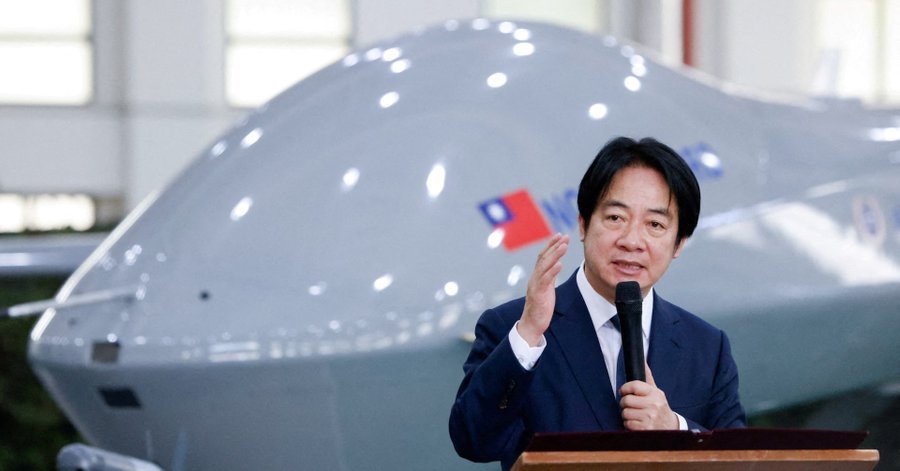
Taipei: Taiwan’s opposition-controlled parliament on Thursday rejected a government proposal for a T$210 billion ($6.6 billion) special budget to purchase military drones and approved an alternative plan instead.
The government proposal, which would have run through 2031, aimed to fund about 210,000 drones. Officials said the spending was needed in response to the growing role of uncrewed weapons in modern warfare and rising security concerns involving China.
Under the opposition-backed plan, T$40 billion would be allocated annually for drone-related spending, totaling T$240 billion over six years. The annual amount could be increased if necessary.
Premier Cho Jung-tai said the government would assess whether the legislation meets Taiwan’s defence requirements, supports defence self-reliance and helps develop the country’s drone and unmanned-vehicle industry.
Taiwan’s defence ministry expressed regret over the rejection of the government proposal, saying it had been developed following internal assessments and coordination with unnamed allied countries.
The opposition, led in parliament by the Kuomintang, argued that greater legislative oversight was needed. Lawmaker Hsu Chiao-hsin said the government should not request large sums without sufficient supervision.
Defence Minister Wellington Koo has previously warned that an annual T$40 billion spending limit could restrict Taiwan’s ability to rapidly expand its drone capabilities, noting that the ministry had planned to spend T$42.1 billion on drones in 2027 alone.
The ruling Democratic Progressive Party also raised concerns that delays in approving Taiwan’s annual budget could affect future drone spending and defence planning.
Taiwan has been expanding its drone capabilities as part of broader efforts to strengthen its defence industry. The United States has also supported Taiwan’s development of military drones.
The dispute over the drone budget reflects broader differences between Taiwan’s government and opposition-controlled parliament over defence priorities, spending levels and legislative oversight.
About the Author