TAIPEI: – Taiwan entered the final day of campaigning for local elections on Friday, with the closely watched vote drawing attention from Beijing as Taipei’s defence ministry reported a surge in Chinese military aircraft activity around the island.
Campaigns for mayoral and county magistrate positions across Taiwan’s 22 cities and counties have largely focused on local issues, including transport and the environment. However, despite the elections having no direct impact on Taiwan’s China policy, Beijing has repeatedly intervened in the political debate.
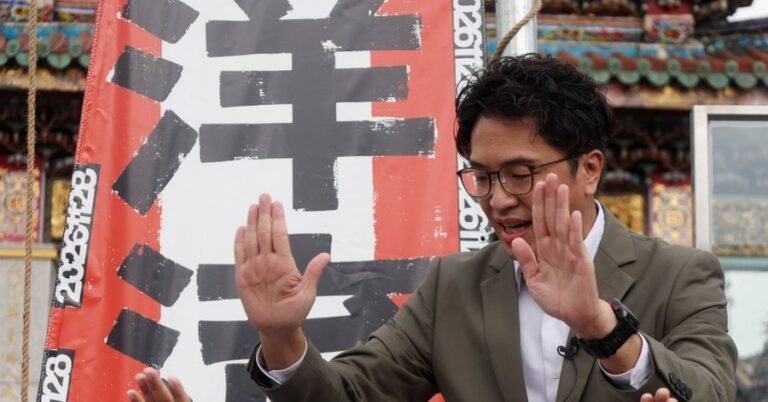
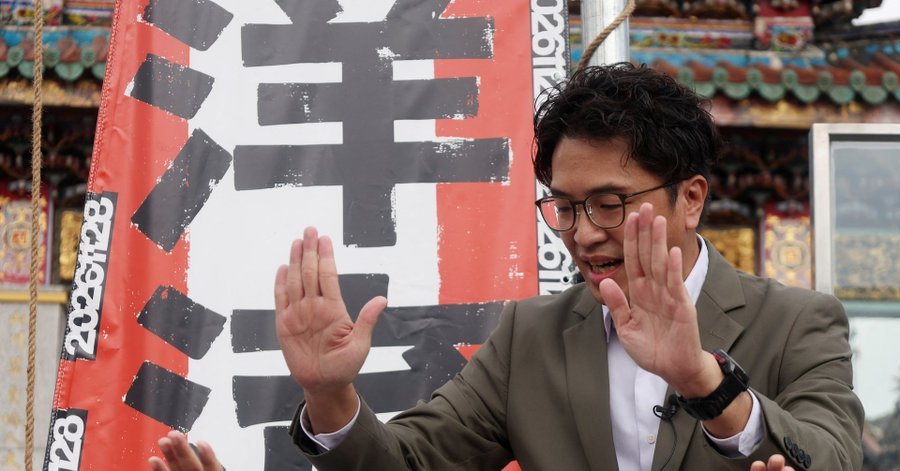
China has denounced Puma Shen, the governing Democratic Progressive Party’s (DPP) candidate in the closely contested Taipei mayoral race, who is wanted by Chinese police on allegations of separatism.
Beijing, which claims Taiwan as part of its territory, has intensified military and political pressure on the island to accept its sovereignty claims, which Taipei rejects.
Taiwan’s defence ministry said it had detected 30 Chinese military aircraft operating around the island, with 26 crossing the Taiwan Strait’s median line. The aircraft conducted what Beijing described as a “joint combat readiness patrol” alongside Chinese naval vessels.
China’s Defence Ministry did not immediately respond to a request for comment. On Thursday, it said reunification was an unstoppable trend, adding that Taiwan’s people could feel safer under the protection of the Chinese military.
Taipei Mayoral Race in Focus
The Taipei mayoral contest has emerged as a major battleground between Shen, an academic-turned-lawmaker and specialist in China’s information warfare, and incumbent Mayor Chiang Wan-an of the opposition Kuomintang (KMT).
Both candidates began Friday by touring the capital on campaign vehicles, urging supporters to turn out and vote.
Chiang planned to hold an outdoor campaign rally in the evening, while Shen cancelled his planned rally over concerns about traffic congestion and instead scheduled an online event with DPP leaders.
Chiang said he had completed several important projects during his four years in office and hoped voters would give him another term to continue his work.
Voters will cast their ballots between 8 a.m. and 4 p.m. on Saturday, with results expected later in the evening.
In the previous local elections in 2022, the KMT secured a decisive victory, winning 14 cities and counties compared with five for the DPP. Other parties and independent candidates won the remaining three.
Political manoeuvring ahead of Taiwan’s presidential and parliamentary elections, scheduled for early 2028, is expected to intensify following Saturday’s vote.
President Lai Ching-te is widely expected to seek a second term, while the KMT has yet to announce its candidate. Former journalist and Taichung Mayor Lu Shiow-yen is considered a potential frontrunner.
The KMT traditionally supports closer relations with Beijing, whose government refuses to engage with Lai, labelling him a separatist. Lai maintains that Taiwan’s future can only be determined by its people.
In April, KMT Chairwoman Cheng Li-wun visited Beijing and met Chinese President Xi Jinping.
About the Author