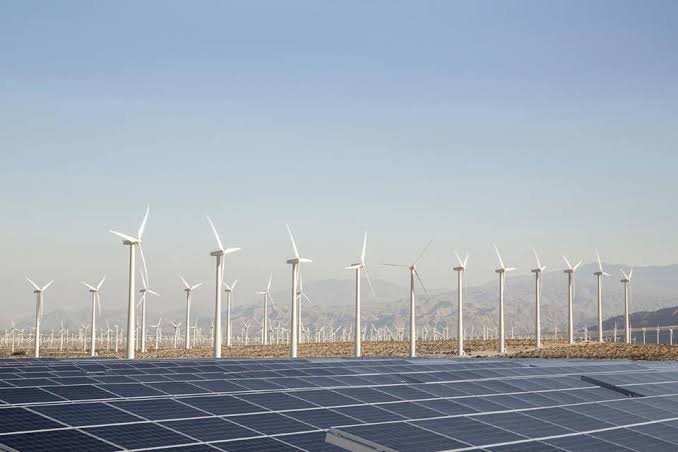
China is leading in global environmental governance, by taking a proactive role in international negotiations on climate change and extending the ecological dimension of its Belt and Road Initiative (BRI). Prior to CPEC, Pakistan faced electricity shortfalls exceeding 4,500 MW. By December 2017, Pakistan achieved a surplus in electricity production for the first time. Leaders from both countries presented an upgraded version of CPEC with a new “green corridor” in October 2024, opening the door for solar to become the next big investment in CPEC (Hong Zhang, 2025). Pakistan is swiftly shifting toward consumer-driven distributed solar energy. Since 2023, Pakistan has faced severe annual heatwaves that have caused repeated outages and rising electricity tariffs, has forced households and small businesses to turn to the only reliable source of power they have left: the sun. Pakistan imported 36 GW of solar panels from China in 2025 as compared to 16 GW in the previous year. Much of Pakistan’s solar transformation has been enabled by market-led revolution and China’s dominant solar-manufacturing ecosystem.
A detailed literature review leads to the conclusion that through green CPEC, China is assisting Pakistan in the adaptation to solar panels. Green CPEC initiatives is one of the foremost in which both nations took their initiative for making a green decarbonized CPEC by incorporating green energy. (Liaqat, 2024). China aims to position CPEC as a green and sustainable project within its Global Development Initiatives 2030, aligned with the UN 2030 SDGs. Unprecedented hike in electricity tariffs, the removal of diesel subsidies in agriculture, Pakistan’s economic crisis and high global fuel prices, led to solarization because it offered cheaper and more reliable energy as compared to the grid. Pakistan’s residential sector became an important early adopter to solar panels. China’s 15th Five-Year Plan places strong emphasis on advanced manufacturing, intelligent transformation, solar energy and green development. (DAWN,2026).
Over the past five years, Pakistan imported 50 gigawatts (GW) of Chinese solar panels. Dr. Shahid Hussian (personal communication, 24 September 2026) said that the Green CPEC should not be judged by the number of megawatts of clean energy installed, but by its ability to enhance the everyday lives of people at the grassroots level. In Pakistan, households are increasingly using rooftop solar systems to control electricity expenses, people are turning to solar solutions to bypass power outages. These tangible changes are a clear illustration that renewable energy is no longer just a national infrastructure agenda but instead is becoming a part of local economic and social life. Affordable Chinese solar panels have expanded energy access for urban middle-class, many experiencing reliable electricity for the first time. (SDPI). Villages that endured hours-long blackouts can now run fans, pumps, and small appliances. Prof Dr. Murad Ali (personal communication, 2 October 2026) narrated that the Government inefficiency in Pakistan to provide affordable and reliable energy lead to people led solarization boom. First CPEC energy projects were majority coal-based, but now in Green CPEC it turned into renewable energy. There is no new energy project in CPEC, because China trust on Pakistan is decreasing due to security challenges, Pakistan’s lack of implementation capacity and inconsistency of policy. The spread of inexpensive Chinese solar panels has been transformative for Pakistan.
Pakistan can not only import solar panels but can import green technology from China to build a local market. China can train Pakistani skilled workers in green technology and solar manufacturing. Pakistan could use CPEC-linked cooperation to develop renewable-energy equipment, and adopting green technologies. Collaborative efforts and policy coordination between relevant ministries, including the Ministry of Energy, Ministry of Planning and Development, and trade, are necessary to ensure sustainable energy growth driven by CPEC. For complete transition to green energy, Pakistan should incentivize solar panels, reduced or cut taxes. People can be sent to China for training to bring that knowledge and expertise back in Pakistan. Pakistan should turn Special Economic Zones (SEZs) into green special economic zones (GSEZ) by offering tax incentives and partnering with China for local manufacturing of solar panels.
China’s energy footprint in Pakistan becomes impossible to ignore. China is a global leader in environmental governance. In particular, to bolster environmental cooperation under the BRI, Beijing announced the Green BRI in 2017. This vision reflects China’s ambitions for the BRI to become climate‐neutral, and nature friendly. In 2023, China’s green energy investments reached USD 7.9 billion, accounting for 28% of its energy engagement. This marks the greenest year since the Belt and Road Initiative (BRI)’s 2013 inception. China is using environmental diplomacy, which means efforts between two or more states—here, China and Pakistan to jointly address ecological problems through negotiation and collaboration. But this shift exposes deeper structural issues. Because Pakistan lacks domestic manufacturing capacity, every solar expansion increases its dependence on imports. Pakistan has witnessed one of the most rapid and unanticipated transitions to clean energy, in just a few years, the country’s electric grid transformed from negligible solar power to an expected 20% of all its electricity coming from solar by 2026.
Energy access is no longer something only the state provides; it is something people build for themselves. The grassroots electrification, enabled almost entirely by Chinese manufacturing, has shifted the social meaning of energy in Pakistan. Pakistan has pledged to generate 60 percent of its electricity from renewable sources by 2030. Pakistan solarization transition is being improvised by households and businesses acting out of necessity rather than guided by coherent policy. Pakistan should use CPEC 2.0 to build local capabilities rather than merely expand imports of clean equipment from China.
Author: Suleman Ahmad
He is a China Fellow in the China Fellowship Program at the Asian institute of Eco Civilization Research and development and Embassy of people’s republic of China in Pakistan and digital Advocate in the Institute of Policy Studies Islamabad.
About the Author