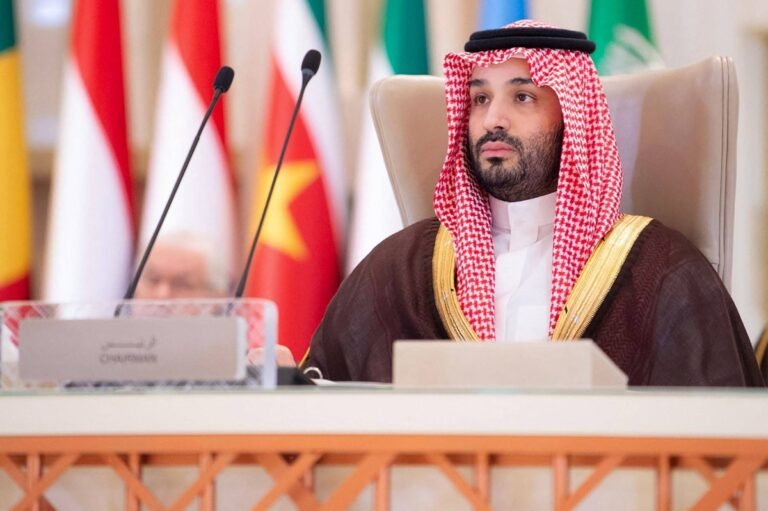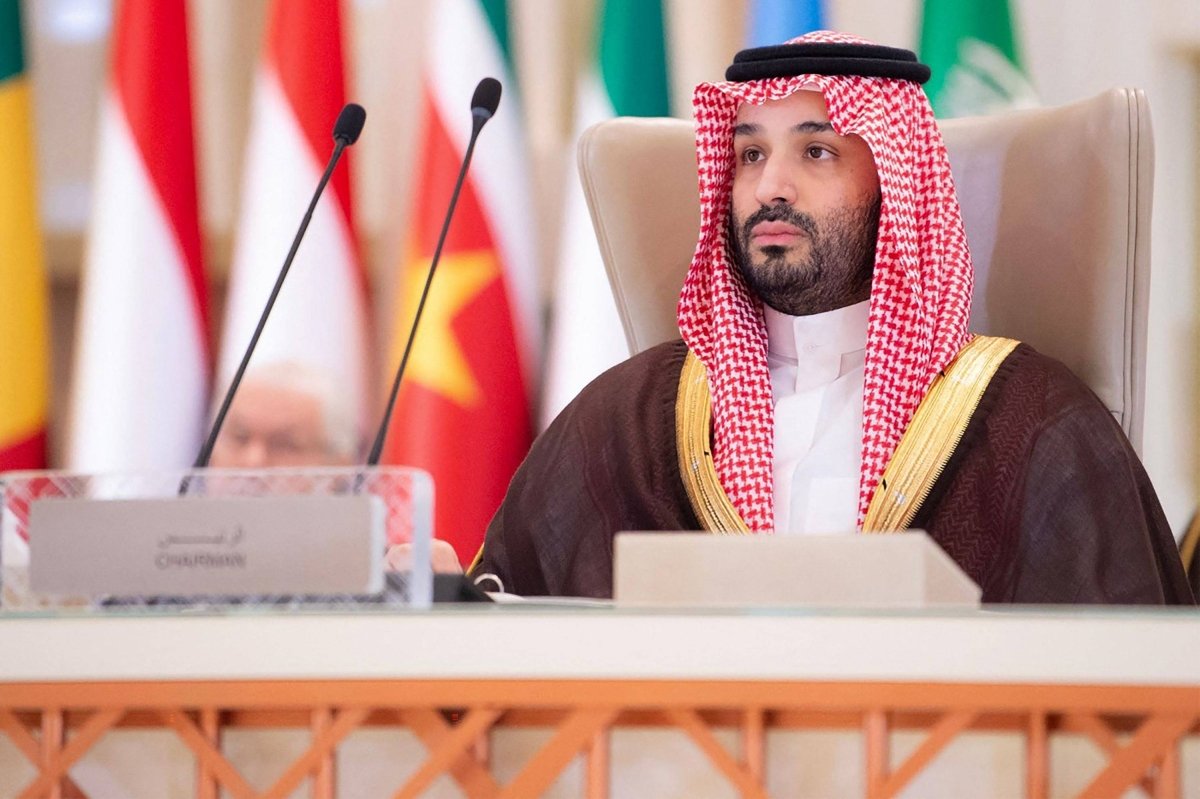
A handout picture provided by the Saudi Press Agency SPA on November 11, 2024, shows Saudi Crown Prince Mohammed bin Salman addressing the joint extraordinary leaders summit of the Organization of Islamic Cooperation (OIC) and the Arab League in Riyadh. Saudi Arabia's de facto ruler called for immediate ceasefires in Gaza and Lebanon at the November 11 summit that will renew calls for a Palestinian state. (Photo by Ahmed NURELDINE / SPA / AFP) / RESTRICTED TO EDITORIAL USE - MANDATORY CREDIT "AFP PHOTO / HO / SAUDI PRESS AGENCY SPA" - NO MARKETING NO ADVERTISING CAMPAIGNS - DISTRIBUTED AS A SERVICE TO CLIENTS
The Crown Prince has already demonstrated that Saudi Arabia can bring rivals to the negotiating table, engage competing global powers and build new regional partnerships. The question is whether he can turn these achievements into a lasting regional order. There is one more thing he must build.
Mohammed bin Salman has already demonstrated that he is willing to challenge conventional assumptions about Saudi Arabia’s position in the international system. His approach to diplomacy, economic transformation and regional security suggests that his ambitions extend beyond modernizing the Kingdom. Saudi Arabia under the leadership of Mohammed bin Salman is not merely responding to the developments in the Middle East rather it is shaping the order in the region.
For years, the rivalry between Riyadh and Tehran were engaged in regional tensions, and competing security interests. The decision to restore diplomatic relations demonstrated that Mohammed bin Salman was prepared to pursue a different approach.
Mohammed bin Salman appears to understand that the emerging international order will not be shaped by one power alone. Saudi Arabia has strengthened its strategic relationship with the United States while deepening its economic and diplomatic engagement with China.
Perhaps the most consequential developments have taken place in the context of regional security.
In September 2025, Saudi Arabia and Pakistan signed a Strategic Mutual Defence Agreement, formalising an important dimension of their longstanding relationship. In August 2026, Saudi Arabia, Türkiye and Pakistan went further by signing a joint defence agreement in Mecca. This development deserves particular attention.
Saudi Arabia brings financial resources, strategic geography and considerable diplomatic influence. Türkiye brings an established defence industry, military capabilities and regional experience. Pakistan brings substantial military capabilities and an established strategic relationship with the Kingdom. Together, these countries have the potential to develop a significant framework for defence cooperation.
Developments in Syria offer another example. Following the fall of Bashar al-Assad’s government in December 2024, Saudi Arabia became an important supporter of Syria’s reintegration and reconstruction. In February 2025, Ahmed al-Sharaa made Saudi Arabia his first foreign destination as Syria’s president.
In July 2025, a Saudi-Syrian investment forum produced agreements and memorandums of understanding worth more than $6 billion, according to Syrian official reporting. By November 2026, cooperation had expanded further into energy, infrastructure, housing, health and military affairs. These developments illustrate an important dimension of Saudi influence. Riyadh is not simply seeking relationships with established regional powers. It is also positioning itself to influence the reconstruction and political direction of countries emerging from conflict.
However, regional leadership cannot be measured by the number of agreements signed or the scale of investment announced. It must be measured by whether these initiatives produce lasting security, prosperity and confidence among neighbouring countries.
The Palestinian question, the stability of the Gulf, relations with Iran, the reconstruction of Syria and the wider aspirations of Muslim societies will all influence the credibility of its regional ambitions.
If Mohammed bin Salman can translate his diplomatic initiatives into durable institutions, economic partnerships into shared prosperity, and defence cooperation into credible regional deterrence, Saudi Arabia could emerge as the central architect of a new Middle Eastern order.
And this brings us to something rather unusual.
There is one more thing he must build.
Mohammed bin Salman has already demonstrated that he can build ambitious cities, attract international capital, bring competing powers to the negotiating table and establish strategic partnerships with countries possessing very different interests.
But perhaps his most important project will not be another city, financial district or futuristic development.
He must build the mosque.
About the Author