History does not knock on a nation’s door forever. Opportunities arrive, moments emerge, and nations either rise to meet them or remain trapped in the failures of their past.
Pakistan is standing at such a moment. This is not simply another political crossroads. It could be a turning point in the country’s history, an opportunity to rebuild the state, unite its political and military strength, revive its economy and assume a greater role in the Muslim world.
The world is changing before our eyes. New alliances are emerging, established power structures are being challenged, and the Muslim world is beginning to explore a more coordinated strategic future.
Pakistan cannot afford to remain consumed by its internal political battles while history moves forward.
The time for confrontation must end. The time for national reconstruction must begin.
The convergence that could change Pakistan.
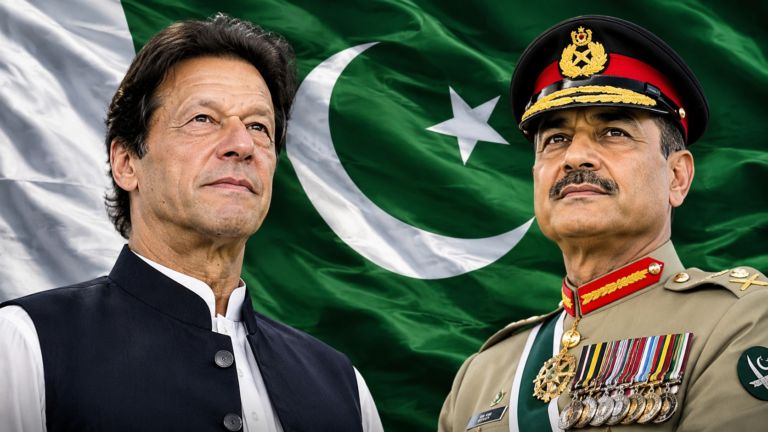
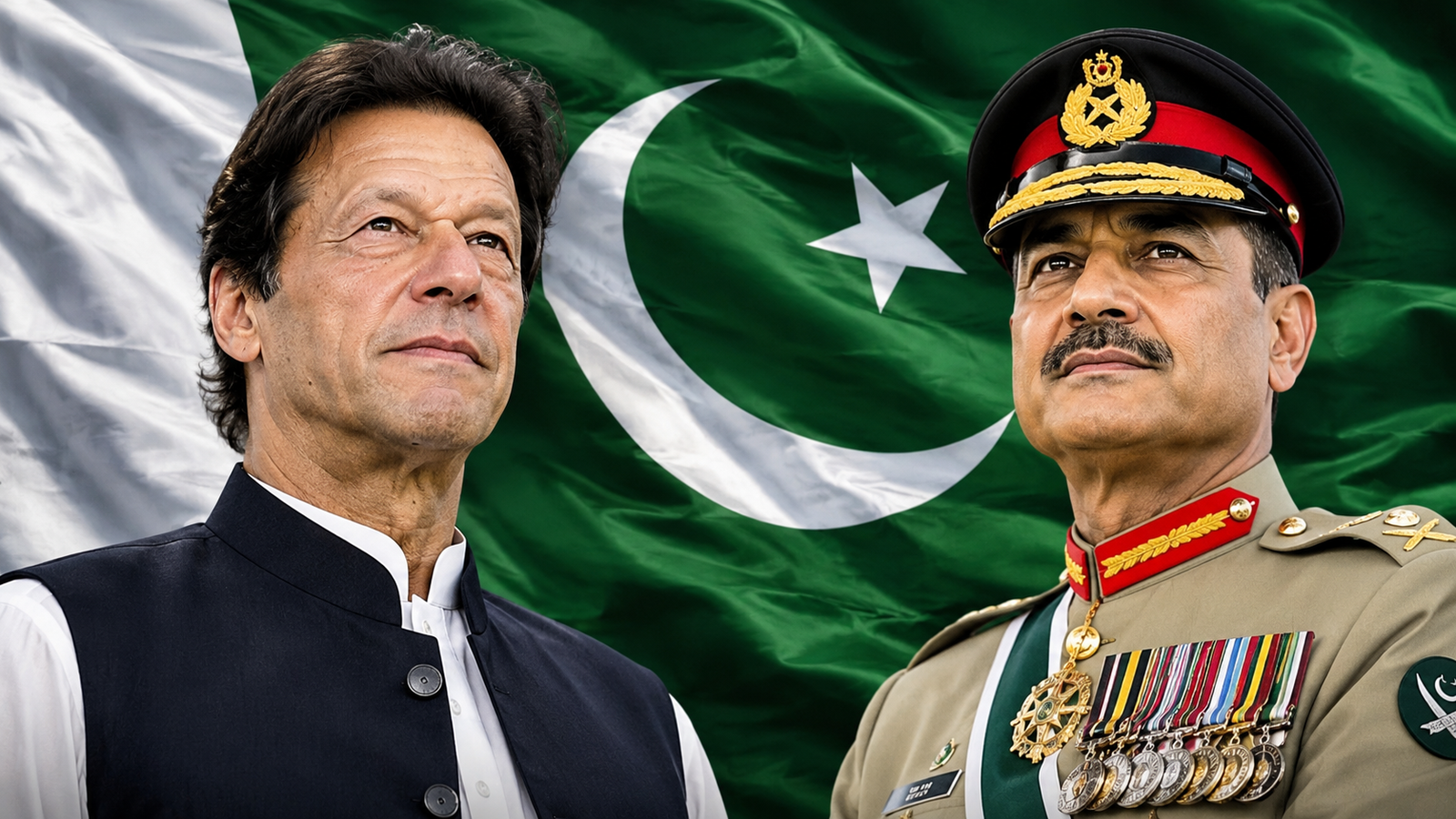
Pakistan’s political reality and institutional strength revolve around two consequential centres of influence: Imran Khan, who commands a substantial political constituency, and Field Marshal Asim Munir, who leads the country’s powerful military institution.
Their convergence around a common national vision could open the door to a historic transformation.
Pakistan needs a political settlement that brings these forces together, restores public confidence and ends the cycle of confrontation.
The military, as a custodian of national security and stability, has a central role in facilitating national stability and supporting this national reconciliation.
It is about Pakistan.
A divided Pakistan cannot realize its full potential. A united Pakistan can change its destiny.
Rebuild the state. Reclaim the future.
Reconciliation must be the beginning, not the destination.
Pakistan needs a complete institutional transformation. Judicial reforms, bureaucratic restructuring, police modernization and effective accountability must become national priorities.
Every institution must deliver. Every public office must carry responsibility. Every individual must be answerable before the law.
The governance system itself must be reconsidered. A presidential model deserves serious consideration as a means of achieving executive continuity, clear responsibility and long-term national planning.
Pakistan cannot enter a new era with an administrative structure designed around the problems of the past.
It needs a state that works, institutions that deliver and a system that rewards merit rather than connections.
No one above the law. No institution beyond accountability. No national resource wasted.
Makkah has sent a strategic signal.
On 7 August 2026, Pakistan, Saudi Arabia and Türkiye signed the Makkah Joint Defence Agreement. The agreement established a framework for trilateral defence cooperation and collective security.
Subsequent developments have given this initiative institutional momentum. A strategic political and defence committee was established, a permanent secretariat was planned in Saudi Arabia, and cooperation in defence industries, technology and military capabilities moved onto the agenda. Türkiye’s parliamentary approval of ratification on 6 November marked another step forward.
This is a development Pakistan must understand in its full strategic context.
Pakistan brings military strength and strategic geography. Türkiye brings an expanding defence-industrial and technological capacity. Saudi Arabia brings financial power and immense regional significance.
Together, they possess the foundations for cooperation that could extend far beyond defence.
The possibilities include advanced manufacturing, artificial intelligence, aerospace, energy, infrastructure, scientific research and industrial investment.
The Makkah agreement should be viewed as an opportunity to build something larger: a more connected, capable and economically integrated Muslim world.
The question is no longer whether Muslim countries possess resources. The question is whether they can bring those resources together.
Pakistan must become an economic power, not a permanent borrower.
A politically stable Pakistan could unlock investment opportunities on an extraordinary scale.
Its minerals, agriculture, energy resources, geographical position, industrial potential and young population offer enormous possibilities.
But potential means little without political stability, institutional confidence and continuity of policy.
Pakistan must move from exporting raw materials to developing industries. From seeking financial assistance to attracting productive investment. From depending on others for technological solutions to developing its own capabilities.
The objective must be to create employment, transfer technology, develop manufacturing and build lasting economic value.
A stronger economy would also give Pakistan greater diplomatic independence and strategic influence.
From a stronger Pakistan to a stronger Muslim world.
Pakistan’s responsibility does not end at its borders.
A politically cohesive, economically stronger and strategically confident Pakistan could become a major facilitator of cooperation between South Asia, the Middle East and Central Asia.
The Muslim world needs more than declarations of unity. It needs joint industries, research institutions, technological partnerships, economic connectivity and coordinated diplomacy.
It needs the capacity to protect its interests, develop its resources and participate in shaping the emerging international order.
Pakistan could help bring this vision closer to reality.
But first, it must demonstrate that it can achieve unity at home.
Now or never.
Pakistan has spent too many years trapped in political confrontation. Another generation cannot be asked to wait for the country to discover its direction.
The opportunity before us demands extraordinary political wisdom from Imran Khan and Field Marshal Asim Munir. Their convergence could help initiate a national transformation whose benefits extend far beyond their own political and institutional tenures.
The task is clear: reconcile the political forces, restore national cohesion, reset the state, attract investment and strengthen Pakistan’s position in the Muslim world.
The Makkah initiative has opened an important strategic horizon. Pakistan must now create the domestic strength required to benefit from it.
There is no shortage of potential. What Pakistan needs is a common national purpose.
Let Islamabad become the centre of a new national understanding. Let Makkah become a symbol of deeper Muslim-world cooperation. Let Ankara, Riyadh and Islamabad build partnerships that translate strategic ambition into economic and technological strength.
Let Pakistan’s young generation inherit a country of opportunity rather than one of endless political disputes.
This is not the time to settle old scores. It is the time to build a new future.
The choice before Pakistan is historic: remain trapped in the politics of the past, or rise to meet the possibilities of the future.
History will not wait. The world will not wait. Opportunities will not wait.
Pakistan must rise now. Not tomorrow. Not after another political crisis. Now.
About the Author