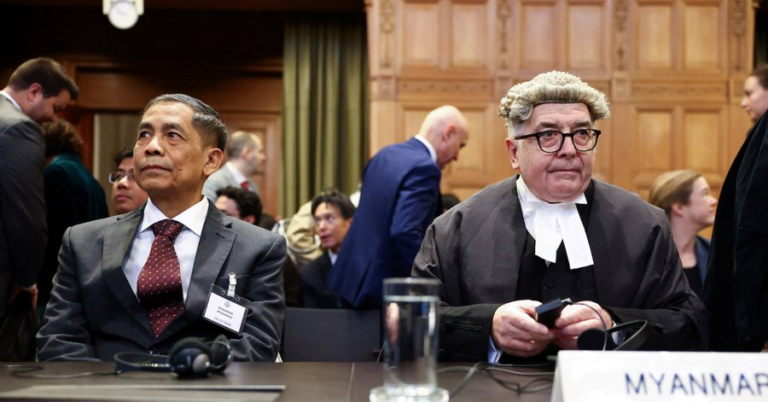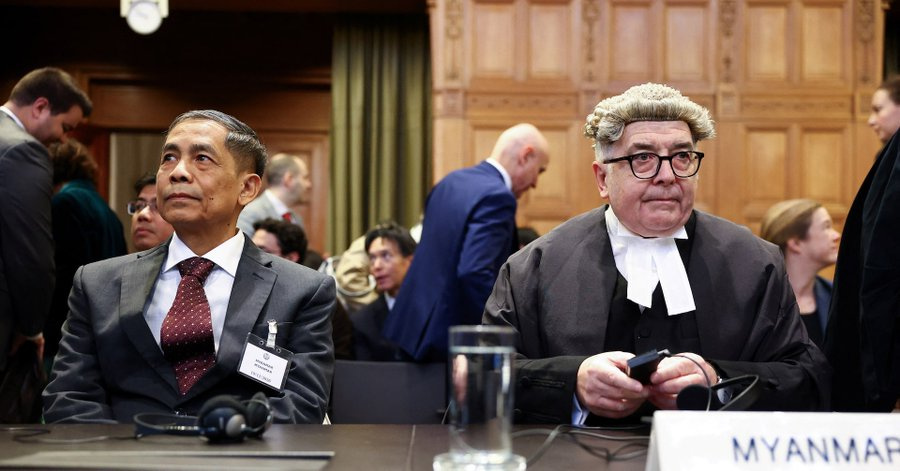
The International Court of Justice (ICJ), the United Nations’ highest court, has ruled that Myanmar committed genocide against the Rohingya Muslim minority during a 2017 military operation in Rakhine State.
In a 9-6 decision announced on Thursday, the 15-judge panel found that Myanmar had violated its obligations under the 1948 Genocide Convention.
ICJ President Yuji Iwasawa said the court had established that Myanmar’s security forces killed thousands of Rohingya civilians, committed widespread sexual violence and carried out extreme acts of violence against children. The forces also attacked civilians attempting to flee the military operation.
The court rejected Myanmar’s argument that its 2017 military campaign was a legitimate security operation targeting insurgents.
The ruling follows proceedings initiated by The Gambia in 2019, which accused Myanmar of violating the Genocide Convention. The West African country asked the court to hold Myanmar accountable and ensure that those responsible for the alleged atrocities face justice.
In August 2017, Myanmar’s military launched what it described as a ‘clearance operation’ in Rakhine State following attacks by a Rohingya insurgent group. The military campaign was accompanied by reports of mass killings, sexual violence and the destruction of thousands of homes.
According to evidence considered by the court, approximately 10,000 Rohingya were killed during the operation, while more than 700,000 fled to neighbouring Bangladesh.
Today, approximately 1.2 million Rohingya refugees live in Bangladesh, most of them in overcrowded camps in the Cox’s Bazar district, where they face inadequate sanitation, infectious diseases, fire hazards and the risk of monsoon-related landslides.
The judgment was welcomed by Rohingya rights activists, who described it as a significant step towards justice for the persecuted community.
Yasmin Ullah, a Rohingya rights activist who attended the proceedings, called the decision a historic moment for the community and other oppressed people whose suffering has long gone unrecognised.
Legal experts say the judgment could also have implications for other international cases involving allegations of genocide.
Melanie O’Brien, a professor of international law at the University of Western Australia, said the ruling could influence other cases because genocides often share similarities in the way they are carried out.
The decision marks a major development in international efforts to establish accountability for the atrocities committed against the Rohingya population.
About the Author